
A HOMEOWNER’S GUIDE · CALIFORNIA
The ultimate guide to
exterior house painting.
A thoughtful repaint starts with the right questions. Explore paint, preparation, timing, and costs for homes in the Central Valley and inland East Bay.
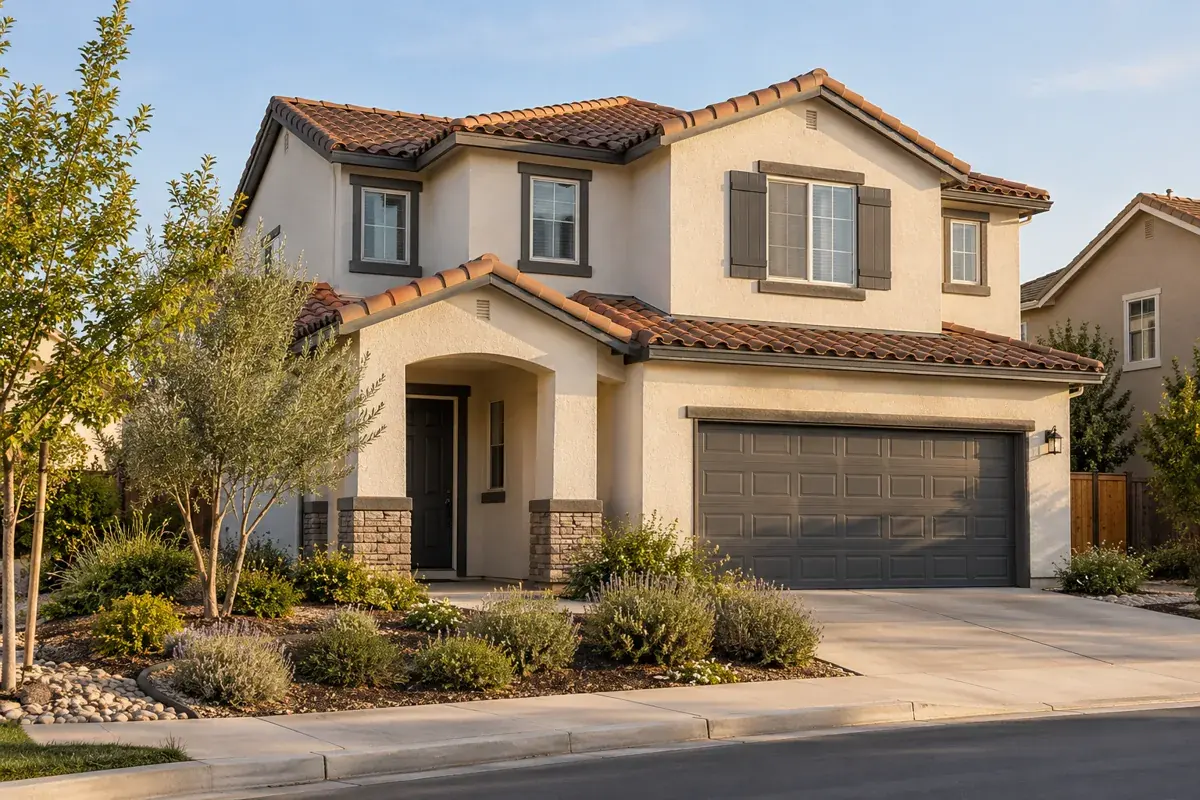
PREPARE WITH CONFIDENCE · CHOOSE FOR YOUR HOME · PLAN FOR LOCAL CONDITIONS
START HERE
What makes a good exterior paint job?
A lasting repaint starts with sound surfaces, suitable coatings, and the right application conditions. Choose colors after checking the substrate and repairs, compare written scopes, and plan around your home’s sun and moisture exposure.
Whether you are refreshing a faded stucco home, updating wood trim, or planning a new color scheme, this guide walks through the decisions that matter. It covers the full project at a practical level so you can have a clearer conversation with a painting contractor.
01 / THE EXTERIOR GUIDE
Why is exterior painting important for your home?
Your home’s exterior shapes the first impression from the street, but its finish also has a practical job. A suitable paint system helps protect paintable surfaces against weathering while bringing siding, trim, doors, and architectural details together.
PROTECT
Care for the surfaces underneath
Keeping coatings and suitable joints in good condition helps limit weather-related deterioration. Paint complements repairs and water-management details; it cannot replace them.
REFRESH
Bring back curb appeal
Faded body colors and worn trim can make a cared-for home look tired. A coordinated palette restores definition and makes entryways and architectural details feel intentional.
MAINTAIN
Catch small issues sooner
Planning a repaint creates an opportunity to inspect cracks, joints, and deteriorated wood. Addressing the cause of a problem before coating it can help avoid repeated work.
Whether you plan to stay for years or prepare the property for sale, the value is also personal: arriving at a home that looks maintained and reflects your style. There is no need to wait for every wall to fail before considering a repaint.
02 / THE EXTERIOR GUIDE
How do you know it’s time to repaint?
A faded color can be a cosmetic issue. Peeling paint, open joints, and exposed wood deserve closer attention because the coating is no longer protecting those areas as intended. Look at the condition of the finish before deciding whether your home needs a touch-up or a full repaint.
Watch the coating
Look for flaking, blistering, chalky residue, bare patches, or uneven fading. A south- or west-facing wall may show wear before a shaded wall on the same house.
Look beneath the finish
Soft wood, recurring stains, and cracks that keep returning can point to a repair or moisture problem. New paint alone will not resolve the cause.
Walk around the home from ground level and note where each issue appears. Photographs help you explain what you are seeing during an estimate. Avoid climbing onto a roof or using a ladder just to inspect an uncertain area.
03 / THE EXTERIOR GUIDE
What changes when you paint in the Central Valley & East Bay?
California is too varied for one exterior painting rule. In the northern San Joaquin Valley, part of the Central Valley, hot, dry summers and cooler, wetter winters affect how a project is planned. Across the inland East Bay, the exposure of the individual house still matters more than a city name.
01
Sun & surface heat
A wall in direct afternoon sun can be much hotter than the air. Check the coating’s surface-temperature limits and plan the work around shade rather than relying only on the forecast high.
02
Dew & winter moisture
Cool mornings, fog, and rain can leave surfaces damp. Dry-looking paint is not necessarily ready for overnight moisture; the product’s application and drying requirements guide the schedule.
03
Wind, dust & exposure
Wind can carry debris onto a fresh finish and complicate spray containment. Landscaping, nearby vehicles, neighboring properties, and changing conditions all belong in the work plan.
For a home in Tracy, Manteca, Lathrop, Ripon, or Modesto, check sunny elevations and exposed trim as well as shaded areas. In Livermore, Brentwood, and Discovery Bay, use the same property-level inspection: inland East Bay homes should not automatically be treated as cool coastal homes. In Mountain House, assess the home’s actual wind and sun exposure rather than assuming a single approach fits the neighborhood.
04 / THE EXTERIOR GUIDE
What is actually inside exterior paint?
Paint is more than color in a can. Its ingredients work together to form the finished coating. Understanding their roles makes it easier to compare products beyond the price per gallon.
●
Pigments
Supply color and hiding power.
●
Binders
Hold the film together and help it adhere.
●
Liquids
Make the coating spreadable during application.
●
Additives
Adjust properties such as flow or mildew resistance.
The formulation matters: coatings with the same color can differ in adhesion, finish, and weathering performance. Compare the complete product system for your substrate and conditions, rather than assuming all exterior paints are interchangeable.
05 / THE EXTERIOR GUIDE
Which paint system suits your exterior surfaces?
The right exterior paint depends on what it must bond to. A premium coating can still fail over loose paint, unresolved moisture, or an incompatible substrate. Start by identifying the surface and existing finish, then choose the preparation, primer, and topcoat together.
| Surface | What to assess first | What to discuss |
|---|---|---|
| Stucco & masonry | Cracks, chalking, moisture, and previous coatings | Compatible masonry coatings and repairs; fresh patches must meet curing requirements. |
| Wood siding & trim | Loose paint, exposed grain, soft wood, and open joints | Repair or replacement where needed, preparation, and primer for exposed or stained areas. |
| Fiber cement | Existing finish, edges, joints, and manufacturer instructions | A compatible repaint system and correct treatment of joints and cut edges. |
| Metal doors & details | Rust, contamination, and coating compatibility | Appropriate cleaning, rust treatment, primer, and finish. |
| Vinyl siding | Condition, manufacturer restrictions, and color choice | Approved products and colors; unsuitable dark colors can contribute to heat-related distortion. |
Is acrylic exterior paint a good choice?
Quality water-based acrylic exterior coatings are common options for compatible siding and trim. Compare the actual product’s substrate approvals, primer needs, sheen, coverage, and application instructions. “Exterior” on the label does not mean it works on every surface.
Does stucco always need elastomeric paint?
No. Elastomeric coatings are a specific system, not an automatic upgrade for every stucco home. The condition of the wall, existing coating, moisture behavior, and manufacturer requirements should determine suitability. Significant or recurring cracks need assessment rather than being hidden under a thicker coating.
06 / THE EXTERIOR GUIDE
What preparation makes an exterior repaint last?
Preparation is where the project’s condition problems are addressed. The goal is a clean, dry, sound surface that can accept the specified coating—not simply a wall that looks clean from the street.
Inspect and define the repairs
Identify failing coatings, damaged trim, cracks, and potential water entry. Agree on which repairs are included and how unexpected damage will be handled.
Clean using the right method
Remove dirt and contamination with a method suited to the material. Excessive washing pressure can damage siding or force water behind it. Allow the substrate to dry adequately.
Remove loose paint and smooth edges
Sound paint does not always need to be stripped. Failing paint needs appropriate removal and preparation so the new finish has a stable foundation.
Repair, caulk, and prime where appropriate
Address agreed repairs and seal suitable joints. Keep intended drainage openings clear. Prime bare, repaired, stained, or otherwise specified areas with a compatible product.
Protect the home before application
Plan protection for windows, fixtures, paving, plants, vehicles, and nearby property. Check wind and access before spraying.
For the project scope and preparation CR Painting offers, explore our exterior house painting service. The written estimate should identify the work your particular home needs.

01
Inspect
02
Clean & dry
03
Repair & smooth
04
Caulk & prime*
05
Protect
Preparation overview. *Use primer and caulk where appropriate to the surface and specified system. Drying and curing intervals are part of the process.
07 / THE EXTERIOR GUIDE
Flat, satin, semi-gloss, or gloss: which finish should you choose?
Sheen changes how much light the painted surface reflects. It influences the look of the home, the visibility of texture, and how the finish can be cleaned. The right choice can differ between the body of the house and its details. Compare the same sage-green siding below: the main difference is how strongly the surface reflects daylight.
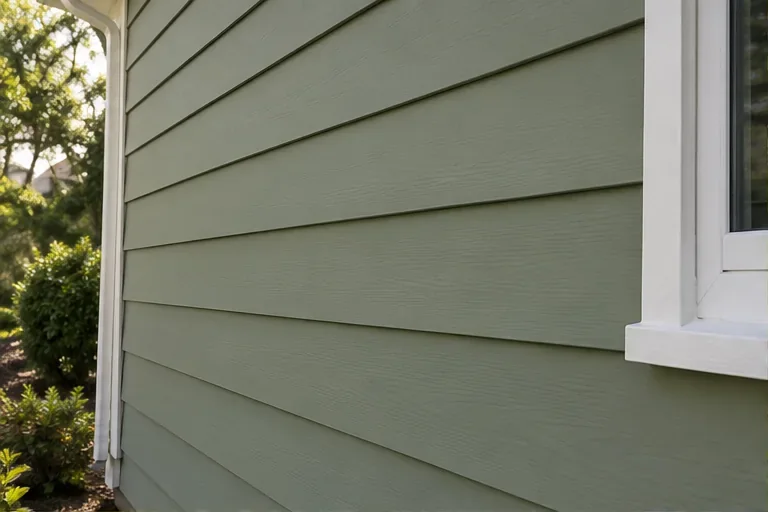
Flat / matte
A subdued finish that can soften the appearance of texture and minor imperfections on large exterior surfaces. Cleaning performance depends on the actual product.
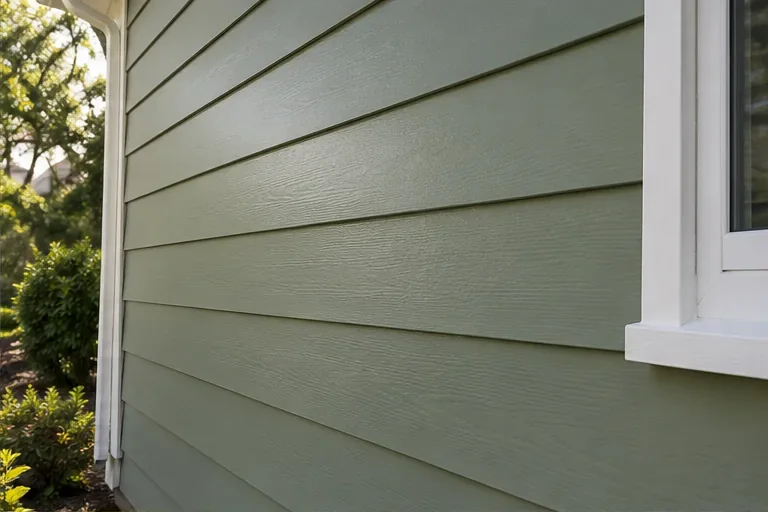
Satin / eggshell
A gentle sheen that can balance a softer appearance with cleanability. Often considered for siding and stucco when compatible with the specified coating system.
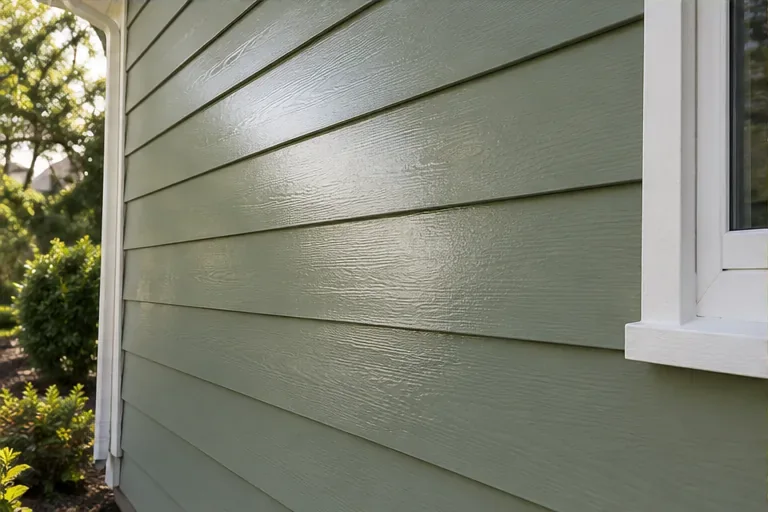
Semi-gloss
More noticeable reflection for trim, doors, or shutters. It can create definition against the body color, while making uneven preparation easier to see.
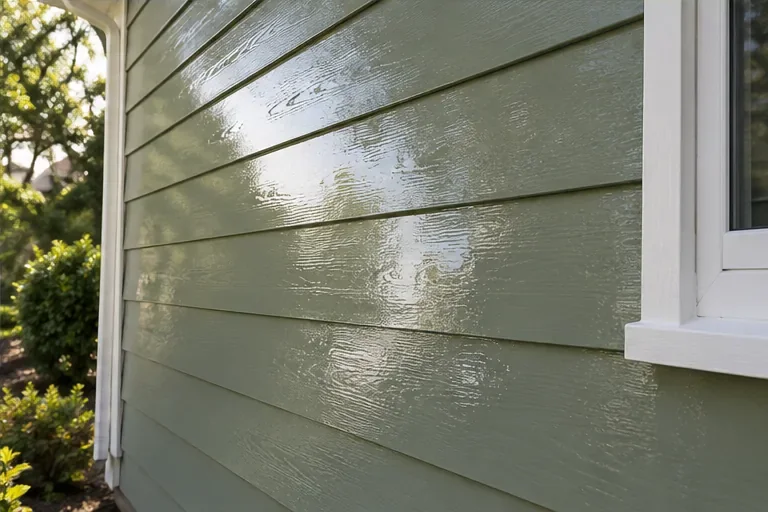
Gloss
A reflective accent finish for suitable doors and details. Surface preparation becomes especially important because light reveals defects.
Illustrative comparison of the same color on exterior wood siding. It shows relative sheen, not a calibrated product sample. Actual appearance varies with the coating, texture, application, and light; satin and eggshell are not always equivalent.
Ask to see the chosen product in the proposed sheen. Matching a color name does not guarantee the same appearance when the sheen, lighting, or surface texture changes.
08 / THE EXTERIOR GUIDE
How should you choose colors and finishes?
Choose colors outside, on your home, before committing to a full repaint. A small screen sample cannot reproduce the effect of direct sunlight, shade, surrounding landscaping, or the texture of stucco.
Start with the elements that will stay
Roofing, brick, stone, paving, and window frames create the existing palette. Compare body and trim colors against those elements. If your property has HOA requirements, confirm the approved palette and approval process before ordering paint.
Test more than one elevation
View samples in morning light, afternoon sun, and shade. In bright inland light, an off-white can look much brighter than it did indoors, while a gray or beige may reveal an unexpected undertone. Dark colors deserve an additional conversation about surface heat and substrate restrictions.

Let the architecture guide the palette
A warm stucco exterior can pair naturally with earth tones and softer trim, while a home with crisp contemporary lines may suit a more restrained palette with stronger contrast. Existing roof tiles, stone, and window frames are useful reference points—not rules that override your preference.
Balance personal taste and neighborhood character
A home can have its own identity while still feeling connected to the street. Look at neighboring homes, the landscape, and any HOA requirements. An accent door can introduce personality without changing the character of the entire exterior.
■
■
■
Warm & grounded
Sand body · soft white trim · deep green accent
■
■
■
Soft & contemporary
Light neutral body · charcoal trim · warm accent
Illustrative palette directions only. These are not manufacturer color matches or a recommendation for every substrate.
Think about trends and long-term enjoyment
Neutral body colors allow details and landscaping to do more of the work. Bolder colors can be rewarding when they fit the home and you enjoy living with them. Test combinations at a useful scale before deciding; the final choice should feel right to you.
At CR Painting, the color conversation starts with the home and the look you want. Bring sample ideas, photographs, or an existing palette to discuss during project planning.
09 / THE EXTERIOR GUIDE
When is the best time to paint, and how long does it take?
Spring and fall can offer useful exterior painting windows, but there is no universally safe season. Summer work may require following shade and adjusting the sequence; cooler months require attention to rain, damp surfaces, and nighttime conditions.
Use the selected product’s technical data sheet for air and surface temperatures, humidity, recoat time, and rain resistance. The old rule that every paint needs the same temperature range is too broad. Application limits vary by product, and the conditions must remain suitable through the required drying period.
Separate working days from elapsed time
A project includes washing and drying, repairs, preparation, paint application, detail work, and a walkthrough. Weather, access, repair discoveries, and drying intervals can add calendar time even when the crew’s work is progressing normally. Ask for a property-specific schedule instead of assuming every home will be finished in the same number of days.
Is spraying better than brushing or rolling?
Each method has a place. Spraying can cover large areas efficiently; brushes and rollers help work paint into texture and finish details. Back-rolling may be appropriate depending on the surface and coating system. Coverage, film build, protection, and the manufacturer’s instructions matter more than the tool alone.

What do professional tools contribute?
| Tool | Its role | What still matters |
|---|---|---|
| Airless sprayer | Efficient application over suitable larger surfaces. | Control overspray, protect surroundings, and meet the coating specification. |
| Brushes & rollers | Work around edges and details; distribute paint into texture where appropriate. | Choose the right applicator and avoid overworking drying paint. |
| Access equipment | Provide appropriate access to elevated areas. | Select and use equipment safely for the site and task. |
| Moisture assessment tools | Help evaluate whether the substrate is suitable for coating. | Interpret readings for the material and manufacturer requirements. |
Why isn’t one heavy pass a shortcut?
A coating needs the specified film build and drying intervals. Applying too much at once can create runs and drying problems; applying too little can leave inadequate coverage. The agreed system should define coats and application requirements, with enough time between stages.
10 / THE EXTERIOR GUIDE
What determines exterior house painting cost?
The cost comes from the work required to prepare and coat the home. Interior floor area alone is a poor comparison: a one-story house with sound paint and a two-story house with deteriorated trim can have similar floor plans but very different exterior scopes.
The biggest scope variables
- Paintable wall area, height, and access.
- Loose paint, repairs, and preparation needs.
- Stucco, wood, metal, and other materials.
- Coating system, colors, and coverage needs.
- Doors, fascia, eaves, fences, and other extras.
- Protection, working space, and site logistics.
Compare the scope before the price
Ask each contractor to identify included surfaces, preparation, repair allowances, coating products, application requirements, exclusions, cleanup, and warranty terms.
A lower total may reflect a smaller scope. Ask what is included before treating two estimates as equivalent.
A broad California price range can create misleading expectations for a particular home. An on-site assessment is a better basis for budgeting. CR Painting offers a free estimate for your exterior project, with the work defined for the property.
11 / THE EXTERIOR GUIDE
Should you paint it yourself or hire a contractor?
A small, accessible surface can be a manageable DIY project for someone with the right skills and time. A whole-home exterior adds access, preparation, coating selection, containment, and weather planning. Two-story elevations, extensive peeling, suspected lead paint, and deteriorated wood make the decision more complex.
When comparing contractors, verify the business’s current license through the California Contractors State License Board, ask about appropriate insurance, and review the written scope. Check who will handle repairs, protection, changes to the schedule, and the final walkthrough.
Ask for the actual warranty document rather than relying on a general promise. Understand coverage, exclusions, maintenance responsibilities, and the claim process. You can review CR Painting’s limited warranty information before discussing your project.
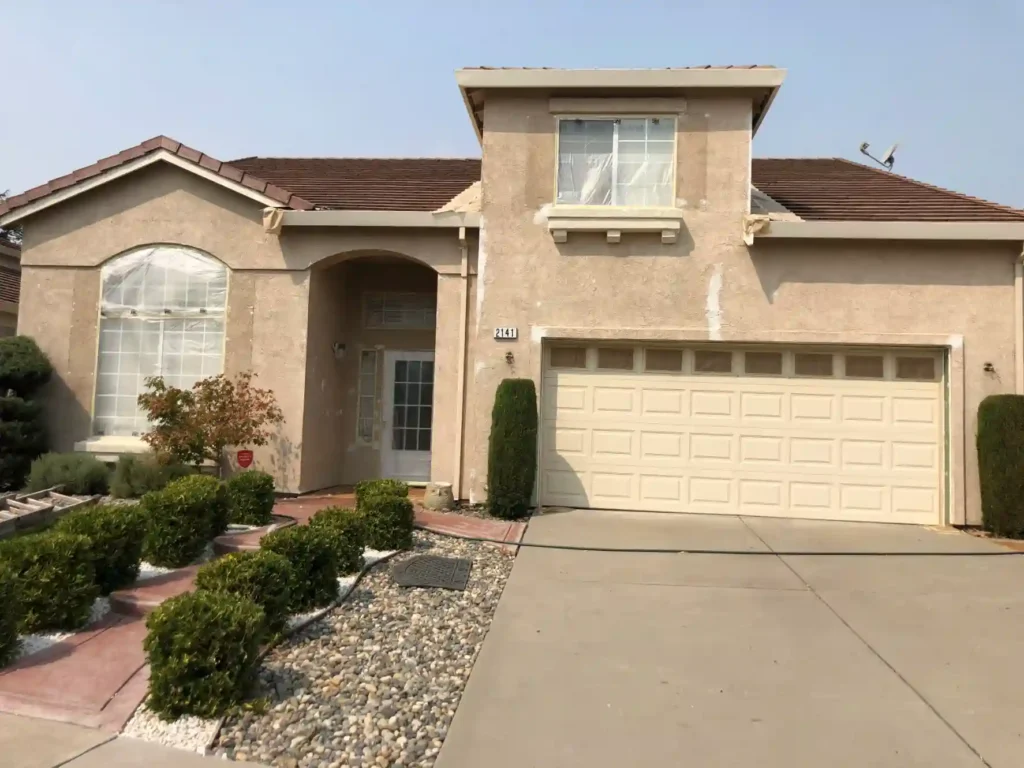
BEFORE
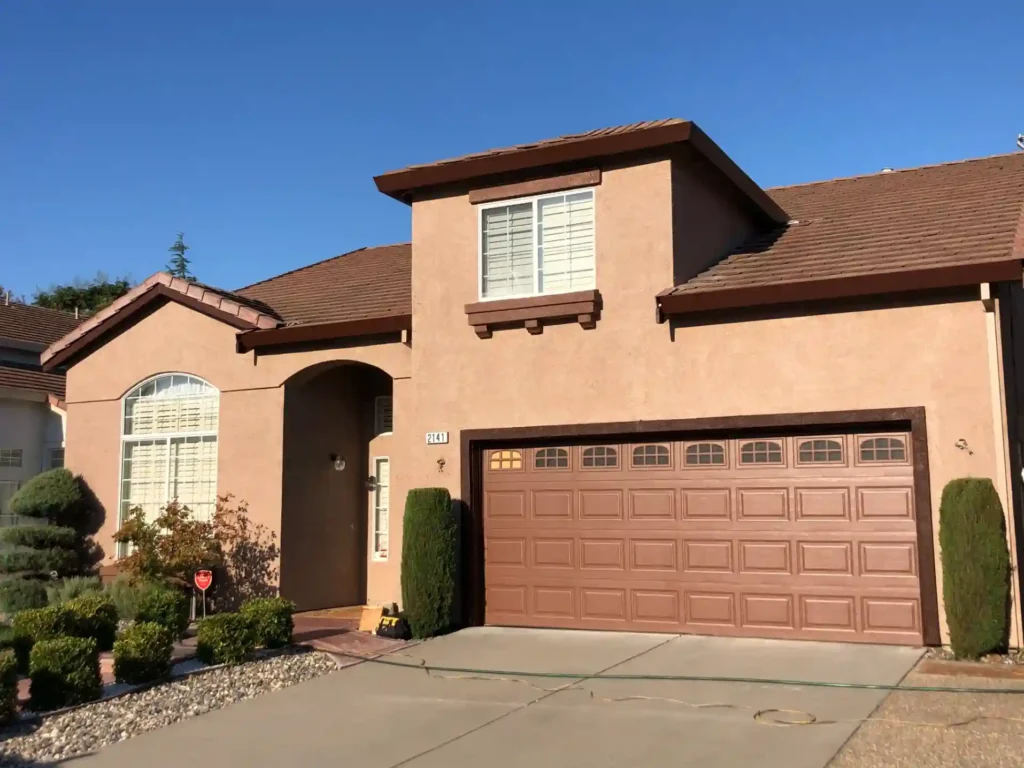
AFTER
A house in Tracy, before and after. Images from CR Painting’s existing project gallery.
What a DIY project involves
- Time for cleaning, drying, preparation, and application.
- Suitable tools, protection, and safe access.
- Understanding coating compatibility and weather limits.
- A plan for waste, leftovers, and unexpected repairs.
What to expect from a professional
- A clear inspection and written project scope.
- Preparation and materials suited to the surfaces.
- Site protection and an organized work sequence.
- Communication, cleanup, and a final walkthrough.
The company’s license, insurance, and any applicable specialty certification should be checked separately. Those are business and project credentials; they do not mean every individual painter holds a contractor license.
12 / THE EXTERIOR GUIDE
Which exterior painting mistakes should you avoid?
The most expensive mistake is often having to repeat work that could have been planned correctly the first time. These problems can affect both DIY projects and poorly managed contracted work.
| Common mistake | Why it matters | A better approach |
|---|---|---|
| Painting over failure | Loose paint and unresolved moisture remain underneath. | Find the cause and prepare a stable surface first. |
| Following the air temperature alone | A sunlit wall can be much hotter; dew can affect drying. | Check surface conditions and the product’s full application window. |
| Choosing on price per gallon only | Coverage, compatibility, and performance differ. | Compare the coating system and the work it requires. |
| Skipping needed primer | Bare, stained, or repaired areas may need specific treatment. | Use the primer required for the substrate and finish. |
| Ignoring recoat intervals | A surface can feel dry before it is ready for the next stage. | Follow the product instructions under actual site conditions. |
| Choosing a color indoors only | Sunlight and surrounding materials change its appearance. | Test outside on more than one side of the home. |
13 / THE EXTERIOR GUIDE
How do you care for the finish after painting?
Exterior paint life varies with preparation, substrate condition, product, application, exposure, and maintenance. Avoid treating a fixed number of years as a guarantee. A sunny wall or weather-exposed trim may need attention before the rest of the home.
- Inspect periodically. Check after wet weather and look for new cracks, open joints, peeling, or stains.
- Clean gently when needed. Follow the coating manufacturer’s cleaning guidance. Aggressive pressure washing can damage the finish.
- Reduce persistent moisture. Keep irrigation from repeatedly soaking siding and trim vegetation away from the wall.
- Address small problems early. Investigate the source of recurring damage before touching it up.
- Save the project details. Keep product names, colors, sheen, and warranty documents for later maintenance.
14 / THE EXTERIOR GUIDE
How can you plan a more environmentally responsible repaint?
Product choice is part of the picture, but so are preparation, waste management, and taking care of the finished coating. Ask about exterior products suitable for your home that meet your preferences and applicable requirements.
Understand lower-VOC options
VOC describes volatile organic compounds. A low- or zero-VOC label should not be treated as proof that a coating is harmless or appropriate everywhere. Review the product information, follow handling instructions, and use exterior coatings only as directed.
Plan for washing, leftovers, and disposal
Ask how the work will manage wash water, paint debris, and leftover materials. Keep waste out of storm drains, soil, and landscaping. Follow local disposal guidance instead of pouring unused paint away.
Buy thoughtfully and keep useful records
Keep labeled touch-up paint in suitable storage, along with the color and product information. Correct maintenance and small repairs can help you care for the existing finish rather than repainting prematurely.
15 / THE EXTERIOR GUIDE
How does exterior painting improve curb appeal and home value?
A fresh exterior helps a home look maintained, coordinated, and welcoming. Consistent body color and clean trim can bring attention back to the architecture instead of faded or patchy areas.
If you are preparing to sell, think about the exterior as one part of the property’s overall condition. Visible deterioration, an unsuitable color combination, or unfinished repairs may distract a buyer. A repaint can improve presentation, but it does not guarantee a particular price increase, return on investment, or faster sale.
If you are staying, the benefit can be simpler: a home you enjoy seeing every day, with a finish chosen for its surfaces and the way you want it to look. Pair the color change with preparation and needed repairs so the improvement is more than cosmetic.
16 / THE EXTERIOR GUIDE
How can CR Painting help you plan the project?
CR Painting provides exterior painting for homes in Tracy and nearby Central Valley and inland East Bay communities. The project starts with a conversation about your home, its condition, and what you would like to change.
An on-site visit helps define the surfaces, preparation, agreed repairs, materials, colors, and schedule. After the scope is agreed, the process moves through washing, preparation and protection, application, trim and detail work, cleanup, and a final walkthrough.
Discuss the applicable limited warranty and any exclusions before work begins. For a closer look at the service and project examples, visit exterior house painting by CR Painting.
17 / THE EXTERIOR GUIDE
Where can you find local help for your exterior project?
This guide focuses on the part of the Central Valley and inland East Bay served by CR Painting. For local painting information, choose your city below. Mountain House homeowners can contact the team to discuss their address and scope.
18 / THE EXTERIOR GUIDE
Exterior painting questions, answered.
Can you paint over peeling exterior paint?
Loose and failing paint needs appropriate preparation first. Painting over it leaves the new coating attached to an unstable layer. Identify moisture or substrate problems before deciding how much removal and repair is needed.
Do you need primer on every exterior repaint?
Not necessarily. Sound, compatible existing paint may accept a specified topcoat after preparation. Bare wood, stains, repairs, chalking, or a change in coating system may require a suitable primer. Follow the selected system’s instructions.
Can exterior painting be done during a hot Tracy or Manteca summer?
It may be possible when the product’s application and drying conditions can be met. Surface heat, direct sun, wind, and the work sequence matter. A hot afternoon may require postponing an elevation or changing the schedule.
Will painting fix stucco cracks or leaking siding?
Paint does not correct the underlying cause of water intrusion or significant movement. Assess and repair the problem first, then choose a compatible finish. Recurring cracks deserve further investigation.
How many coats should exterior paint have?
The written scope should specify the coating system and its application requirements. Two finish coats are common, but coat count alone does not establish adequate coverage or film thickness. The surface, color change, and product specifications determine the work.
Does a fresh exterior guarantee a higher home value?
A well-maintained exterior can improve curb appeal, but a repaint does not guarantee a specific resale return or sale price. Plan around condition, appearance, and maintenance needs rather than an assumed financial result.
FROM PLANNING TO YOUR PROJECT
Let’s take a closer look at your home.
CR Painting serves Tracy and nearby Central Valley and East Bay communities. Discuss your surfaces, preparation needs, and the look you want with a free estimate.